

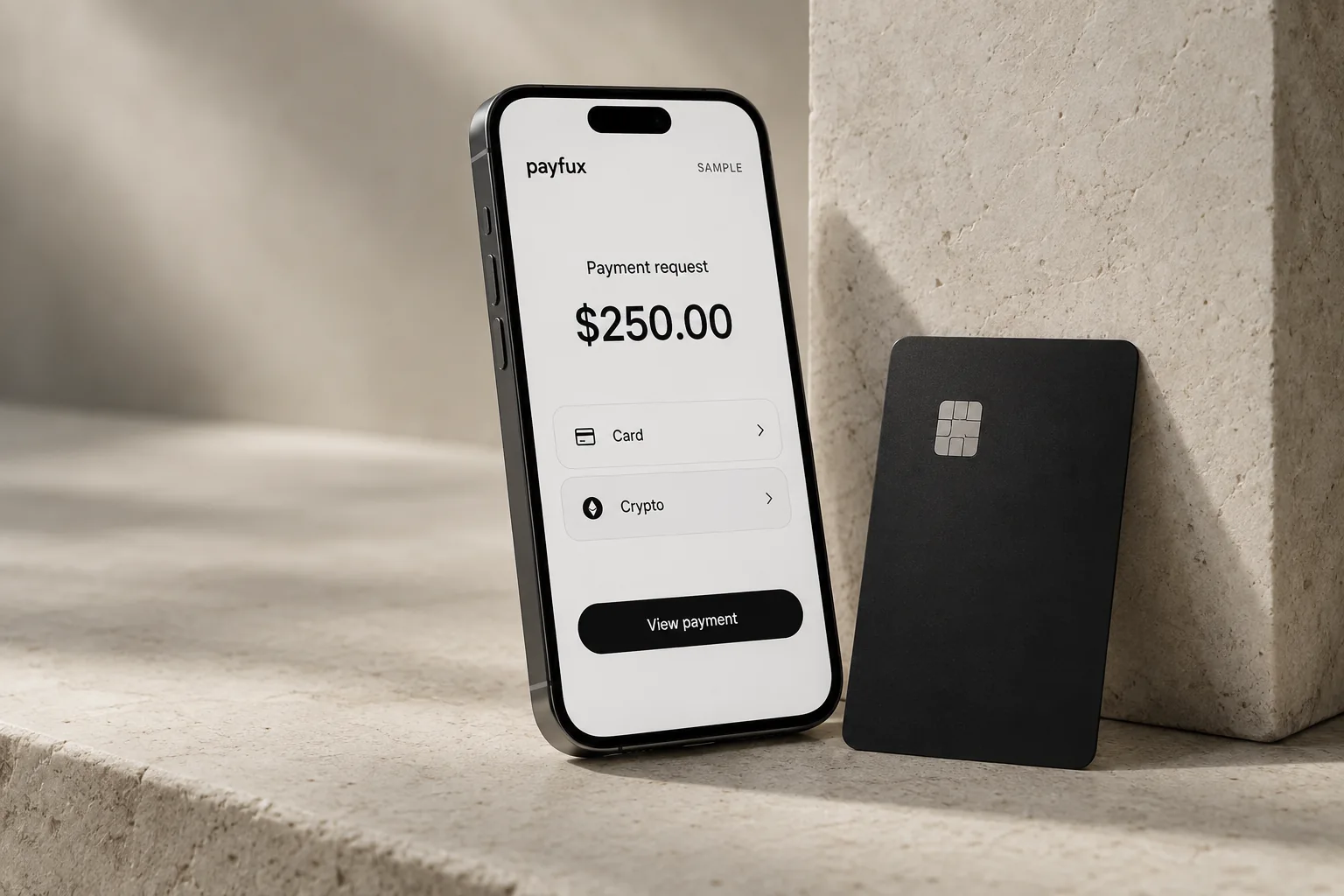
01 / Workflow
One collection flow, source-aware records
The source can change while the operating questions stay the same: who paid, how much arrived, what evidence exists and where settlement is going.
- 01
Create a payment session
The operator supplies the amount, currency, customer context and return reference required by its integration.
- 02
Route an available method
The checkout presents configured payment options based on the customer, amount, currency, location and provider status.
- 03
Record source evidence
The ledger keeps the payment source, reference, gross amount, fee and current confirmation state together.
- 04
Move into settlement
The transaction is reconciled to its credited entity and the configured settlement destination is shown in the operator view.
02 / Operations
A common operating record
Teams do not need a different vocabulary for every payment source. Payfux keeps the shared fields consistent and preserves source-specific evidence.
Method-aware checkout
Available options are selected for the live transaction context instead of being represented as a universal method list.
Source and entity attribution
The operating record identifies the source and connects it to the intended player, invoice, order or customer reference.
State changes
The timeline records whether evidence is pending, confirmed or settled and can be updated when reliable new information arrives.
Fee visibility
Gross amount and recorded fees remain separate so reconciliation does not depend on reverse-engineering a net balance.
03 / Requirements
Method support is configuration-specific
A collection capability does not mean every payment option is available for every customer, location, currency or amount.
- Card-data handling depends on the checkout configuration and payment provider and is documented during integration review.
- Supported crypto assets and networks are confirmed per operator; examples do not form a production support list.
- Refund, dispute and chargeback handling depends on the method, provider and agreed customer configuration.
04 / Questions
Questions operators ask
Which card brands does Payfux support?
Payfux does not publish a universal card-brand list on this page. Available payment options are shown for the customer and transaction context and are confirmed during integration review.
Which cryptocurrencies can customers use?
Supported assets and networks are confirmed for each operator. Assets shown in sample product records should not be read as a complete support list.
Does the Payfux landing-page checkout collect card details?
No payment is submitted from the public product demonstration. The production card-data boundary depends on the agreed checkout configuration and provider model.
Can a payment state change after it appears in the ledger?
Yes. Provider review, blockchain evidence, disputes, reversals or reconciliation can change a displayed state when reliable new evidence arrives.
Are collection and settlement the same event?
No. A payment can be collected or confirmed before its settlement record is completed. Payfux shows these stages separately so the operator can follow the handoff.
Integration review
Review the payment sources your checkout needs
Payfux confirms the available methods, transaction context, card-data model and settlement configuration during onboarding.
Talk to onboarding